Breeds Non-Sporting
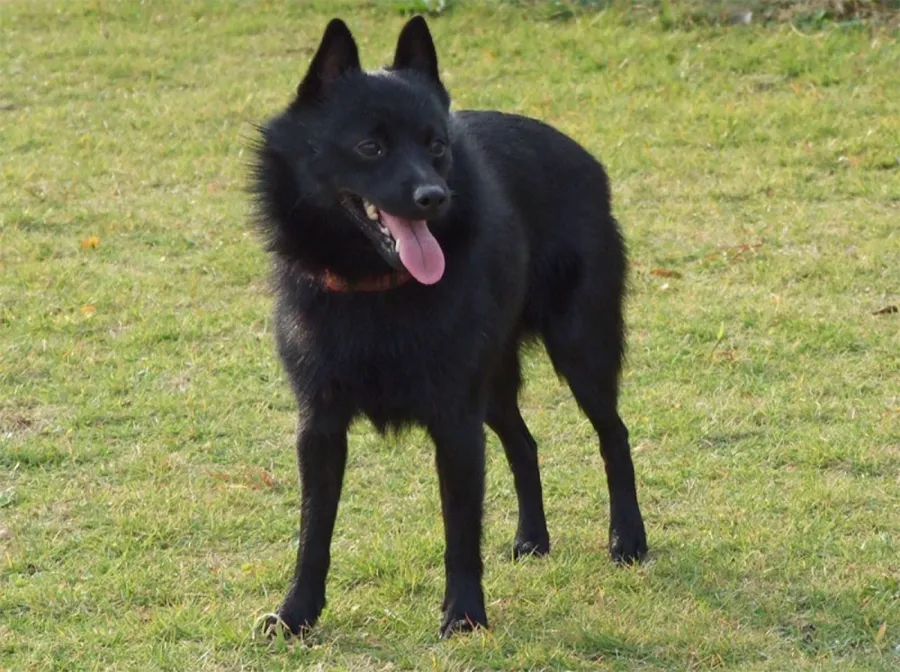
Schipperke
Also known as Little Captain
The Schipperke originated in Belgium as a ratter and watchdog. It worked on barges and in shops. The breed became fashionable in 1885 after Queen Marie Henriette acquired one. Today it is a curious, energetic companion.
At a glance
- Origin
- Belgium
- Developed
- 1600s
- Bred for
- Ratting and watchdog on barges and in shops
- Height
- 10–13 in
- Weight
- 10–16 lb
- Life span
- 13–15 years
- Size
- Small
- Coat
- Dense, harsh double coat; black
- Grooming
- Moderate
- Shedding
- Seasonal
- Exercise
- About an hour a day of walks and play
- Recognized by
- American Kennel Club, United Kennel Club, Fédération Cynologique Internationale, Canadian Kennel Club, The Kennel Club (UK)
Good to know
Schipperkes are curious and energetic, needing daily exercise and mental stimulation. They can be independent, so consistent training is important. Their double coat sheds seasonally.
Health considerations
- Mucopolysaccharidosis type IIIB
- Hip dysplasia
- Patellar luxation
- Legg-Calvé-Perthes disease
Conditions breed clubs commonly screen for. Not every dog will have them. Ask your veterinarian about your own dog.
Did you know?
Queen Marie Henriette of Belgium helped popularize the Schipperke in 1885.
Non-Sporting group
A varied group of breeds with different histories, from the Dalmatian and Chow Chow to the Bulldog and Poodle. Size, coat, and energy vary widely.
Every Schipperke is an individual.
Breed traits are tendencies, not guarantees. Your dog's genetics, early life, health, and everyday experiences all shape who they are. If you'd like help understanding the dog in front of you, let's talk.
Start a conversation