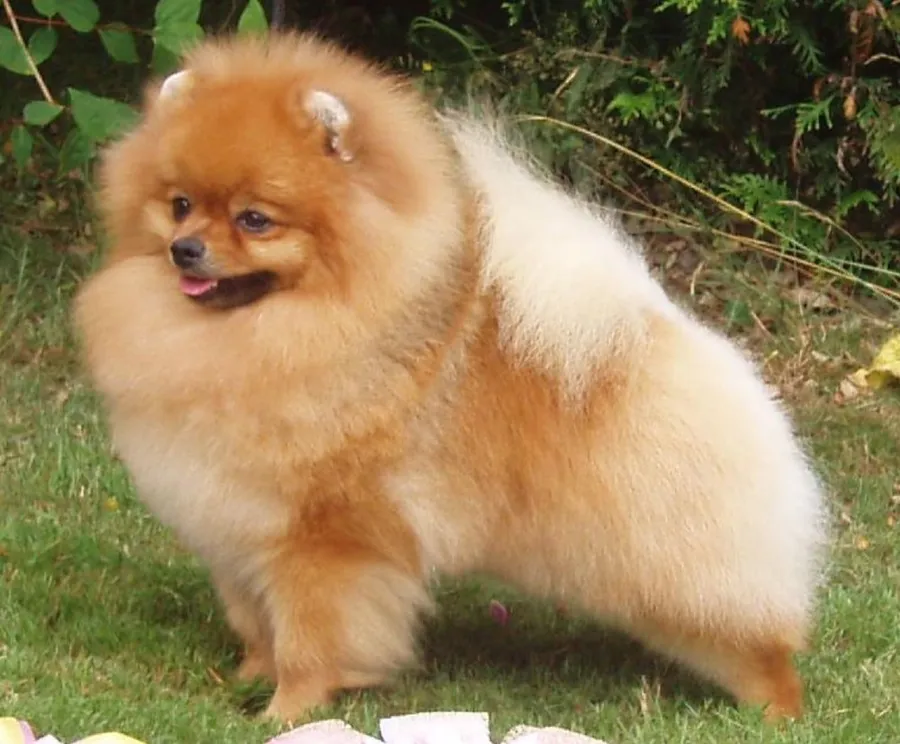
Breeds Toy
Pomeranian
Also known as Pom, Zwergspitz, Dwarf Spitz
The Pomeranian descends from larger Arctic spitz dogs and takes its name from the Pomerania region along the Baltic Sea. Queen Victoria became a devoted fancier in the late 1800s, and her preference for smaller dogs helped shrink the breed to its present size. Poms are spirited, alert, and curious. They often make good watchdogs despite their size.
At a glance
- Origin
- Pomerania (now Germany and Poland)
- Developed
- 1800s
- Bred for
- Companionship, miniaturized from larger spitz dogs
- Height
- 6–7 in
- Weight
- 3–7 lb
- Life span
- 12–16 years
- Size
- Toy
- Coat
- Thick double coat with a soft undercoat and a long, harsh outer coat; many colors, most commonly orange
- Grooming
- Moderate
- Shedding
- Moderate
- Exercise
- About 30 minutes a day of walks and indoor play
- Recognized by
- American Kennel Club, United Kennel Club, Fédération Cynologique Internationale, Canadian Kennel Club, The Kennel Club (UK)
Good to know
Pomeranians can be vocal, so teaching a quiet cue early is helpful. Use a harness rather than a collar to protect the trachea. Regular brushing keeps the double coat healthy and helps manage shedding.
Health considerations
- Patellar luxation
- Tracheal collapse
- Alopecia X
- Dental disease
Conditions breed clubs commonly screen for. Not every dog will have them. Ask your veterinarian about your own dog.
Did you know?
Queen Victoria owned a Pomeranian named Marco and is credited with popularizing the smaller Pomeranians seen today.
Toy group
Small companion breeds, many developed for life alongside people. Small in size but often big in personality; they still need training, enrichment, and gentle handling.
Every Pomeranian is an individual.
Breed traits are tendencies, not guarantees. Your dog's genetics, early life, health, and everyday experiences all shape who they are. If you'd like help understanding the dog in front of you, let's talk.
Start a conversation