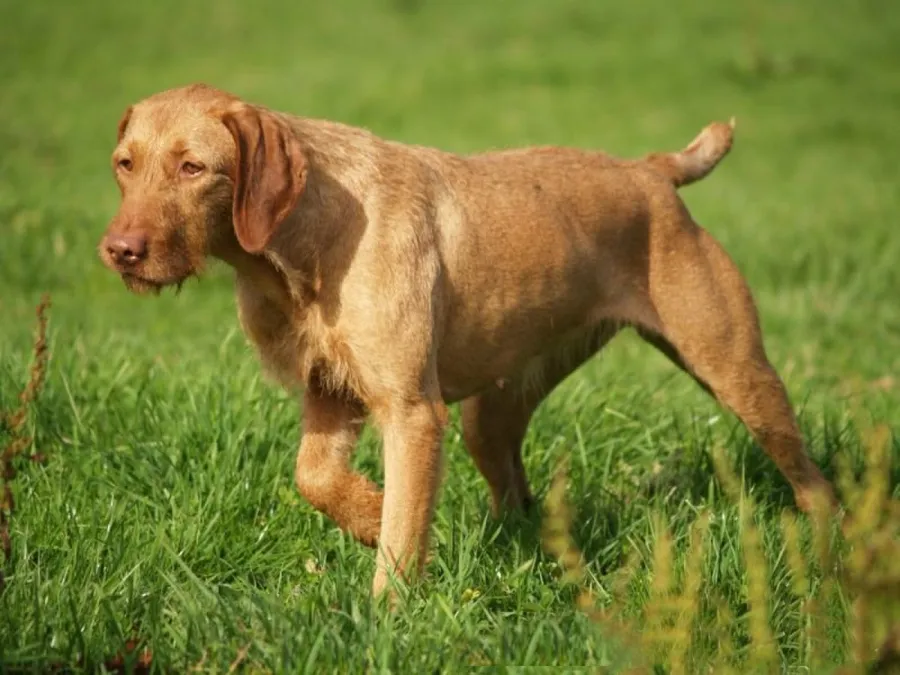
Breeds Sporting
Wirehaired Vizsla
Also known as Hungarian Wire Haired Vizsla, Drótszőrű Magyar Vizsla
The Wirehaired Vizsla was developed in Hungary in the 1930s by crossing Vizslas with German Wirehaired Pointers to create a dog with a sturdier coat for cold weather and rough cover. It is a versatile hunter that points, tracks, and retrieves. The AKC recognized the breed in 2014, and it is known for being gentle, devoted, and eager to work with its people.
At a glance
- Origin
- Hungary
- Developed
- 1930s
- Bred for
- Versatile hunting in harsh weather and rough terrain, on land and in water
- Height
- 21.5–25 in
- Weight
- 45–65 lb
- Life span
- 12–14 years
- Size
- Large
- Coat
- Dense, wiry, close-lying coat with a beard and eyebrows; golden rust
- Grooming
- Moderate
- Shedding
- Seasonal
- Exercise
- 1–2+ hours a day of running and vigorous activity
- Recognized by
- American Kennel Club, United Kennel Club, Fédération Cynologique Internationale, Canadian Kennel Club, The Kennel Club (UK)
Good to know
Wirehaired Vizslas need plenty of exercise and mental stimulation. They are sensitive and do best with gentle, consistent training, and their coat needs regular brushing and occasional stripping.
Health considerations
- Hip dysplasia
- Elbow dysplasia
- Ear infections
Conditions breed clubs commonly screen for. Not every dog will have them. Ask your veterinarian about your own dog.
Did you know?
The Wirehaired Vizsla was created to handle the cold winters and dense cover of Hungary that were hard on the smooth-coated Vizsla.
Sporting group
Retrievers, pointers, setters, and spaniels, developed to help hunters find and retrieve game. Typically active, people-focused, and happiest with regular exercise and a job to do.
Every Wirehaired Vizsla is an individual.
Breed traits are tendencies, not guarantees. Your dog's genetics, early life, health, and everyday experiences all shape who they are. If you'd like help understanding the dog in front of you, let's talk.
Start a conversation