Breeds Sporting
Irish Setter
Also known as Red Setter, Irish Red Setter
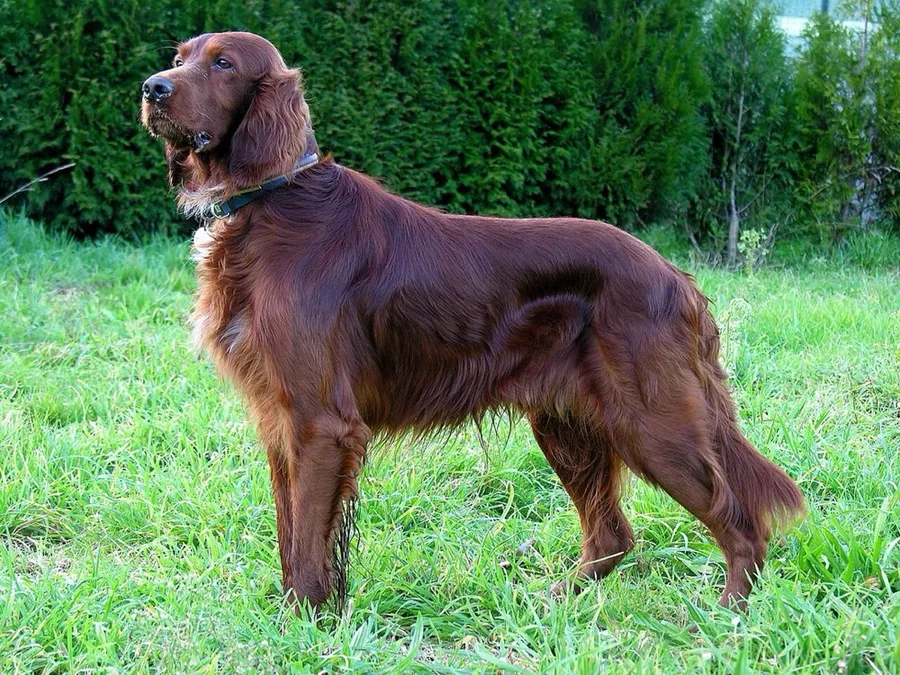
The Irish Setter was developed in Ireland as a fast, wide-ranging bird dog. Its striking mahogany coat made it popular in the show ring by the late 1800s, and the breed became a well-known family companion in the United States. Irish Setters are known for their friendly, fun-loving personality and slow-to-mature exuberance.
At a glance
- Origin
- Ireland
- Developed
- 1700s
- Bred for
- Locating and pointing game birds
- Height
- 25–27 in
- Weight
- 60–70 lb
- Life span
- 12–15 years
- Size
- Large
- Coat
- Moderately long, silky coat with feathering; mahogany to rich chestnut red
- Grooming
- Moderate
- Shedding
- Moderate
- Exercise
- 1–2 hours a day of running and active play
- Recognized by
- American Kennel Club, United Kennel Club, Fédération Cynologique Internationale, Canadian Kennel Club, The Kennel Club (UK)
Good to know
Irish Setters stay puppyish for a long time and need lots of exercise and patient, consistent training. Their coat needs brushing a few times a week.
Health considerations
- Hip dysplasia
- Bloat (gastric dilatation-volvulus)
- Hypothyroidism
- Progressive retinal atrophy
Conditions breed clubs commonly screen for. Not every dog will have them. Ask your veterinarian about your own dog.
Did you know?
An Irish Setter is the title character of Jim Kjelgaard's 1945 novel Big Red, which was later adapted into a Disney film.
Sporting group
Retrievers, pointers, setters, and spaniels, developed to help hunters find and retrieve game. Typically active, people-focused, and happiest with regular exercise and a job to do.
Every Irish Setter is an individual.
Breed traits are tendencies, not guarantees. Your dog's genetics, early life, health, and everyday experiences all shape who they are. If you'd like help understanding the dog in front of you, let's talk.
Start a conversation