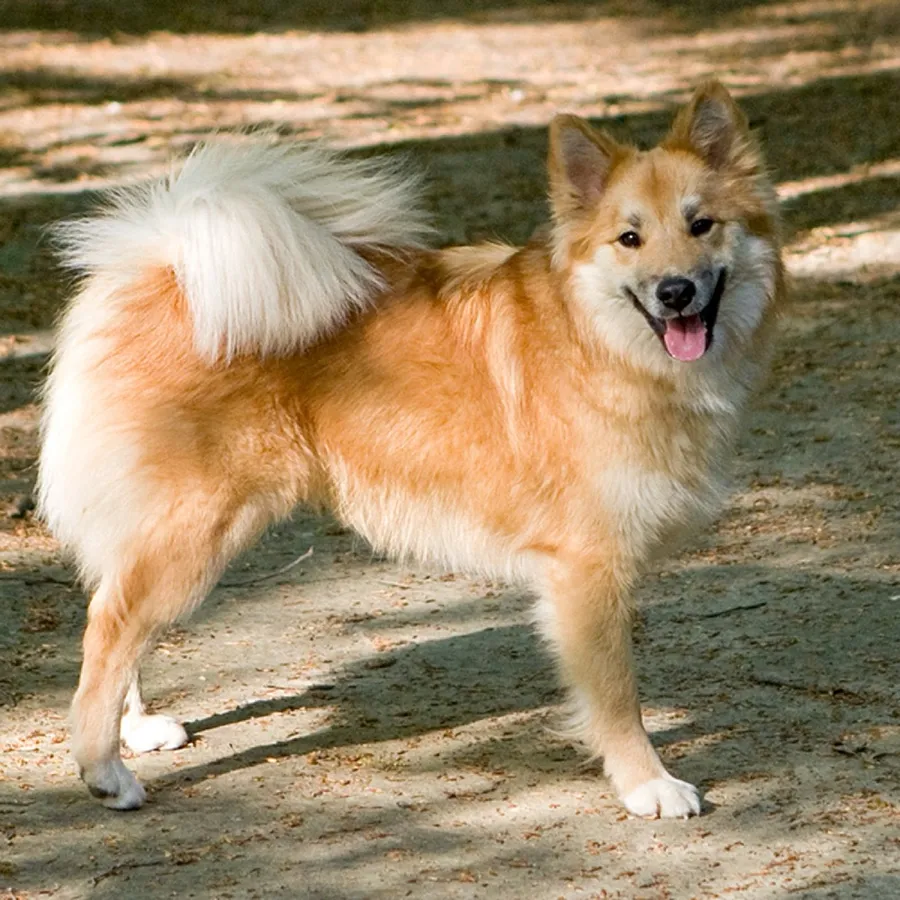
Breeds Herding
Icelandic Sheepdog
Also known as Iceland Dog, Íslenskur Fjárhundur
Iceland's only native dog breed, the Icelandic Sheepdog arrived with Viking settlers and has worked on Icelandic farms for over a thousand years, rounding up livestock and sounding the alarm. It nearly disappeared in the 20th century but was preserved by dedicated breeders. These spitz-type dogs are warm, sociable, and people-loving.
At a glance
- Origin
- Iceland
- Developed
- Arrived with Viking settlers around 874–930 AD
- Bred for
- Herding sheep and horses and alerting to approaching visitors
- Height
- 16.5–18 in
- Weight
- 25–30 lb
- Life span
- 12–14 years
- Size
- Medium
- Coat
- Short or long thick, weatherproof double coat; tan, chocolate, gray, or black, with white markings
- Grooming
- Moderate
- Shedding
- Heavy
- Exercise
- About 1 hour a day of activity and play
- Recognized by
- American Kennel Club, United Kennel Club, Fédération Cynologique Internationale, Canadian Kennel Club, The Kennel Club (UK)
Good to know
Icelandics are vocal by nature, so reward quiet behavior early. They are social dogs that do not enjoy long periods alone and need regular brushing, especially during seasonal sheds.
Health considerations
- Hip dysplasia
- Cataracts
- Patellar luxation
Conditions breed clubs commonly screen for. Not every dog will have them. Ask your veterinarian about your own dog.
Did you know?
Icelandic Sheepdogs often have double dewclaws on their hind legs.
Herding group
Dogs developed to gather, drive, and protect livestock. Usually intelligent, responsive, and energetic, with a strong instinct to control movement.
Every Icelandic Sheepdog is an individual.
Breed traits are tendencies, not guarantees. Your dog's genetics, early life, health, and everyday experiences all shape who they are. If you'd like help understanding the dog in front of you, let's talk.
Start a conversation