Breeds Sporting
English Setter
Also known as Laverack Setter, Llewellin Setter (field line)
Setters were developed in Britain to locate birds and then crouch, or 'set,' so hunters could cast nets over the game. In the 1800s, Edward Laverack and later R. Purcell Llewellin refined the English Setter into the elegant breed known today. English Setters are known for being sweet, friendly, and good-natured companions.
At a glance
- Origin
- England
- Developed
- 1800s (setter types much earlier)
- Bred for
- Locating and pointing (setting) upland game birds
- Height
- 23–27 in
- Weight
- 45–80 lb
- Life span
- 11–13 years
- Size
- Large
- Coat
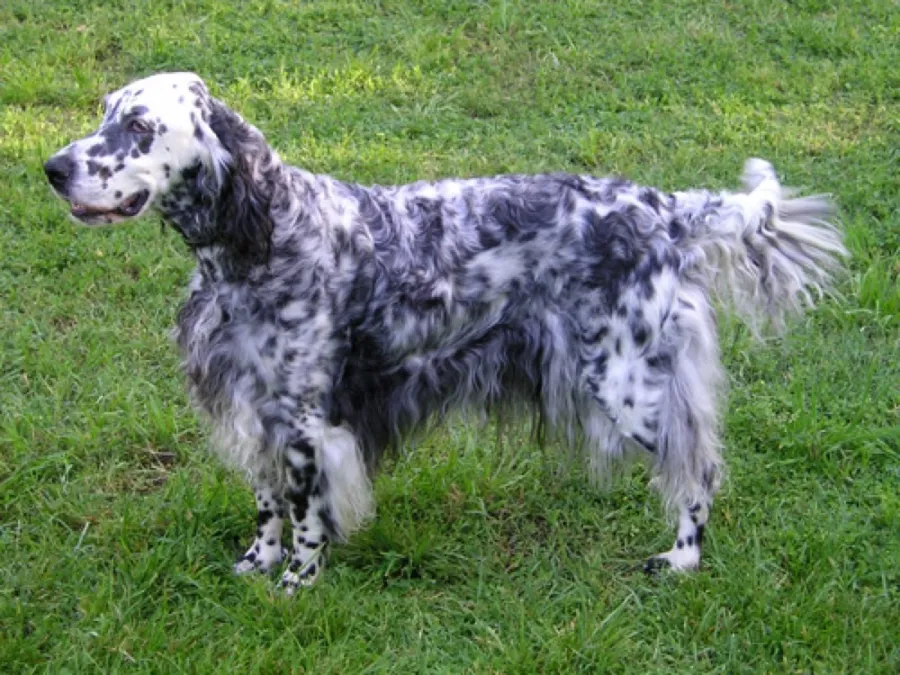
- Long, flat, silky coat with feathering; white with speckled 'belton' markings in blue, orange, lemon, liver, or tricolor
- Grooming
- Moderate
- Shedding
- Moderate
- Exercise
- 1 hour or more a day, including chances to run in safe areas
- Recognized by
- American Kennel Club, United Kennel Club, Fédération Cynologique Internationale, Canadian Kennel Club, The Kennel Club (UK)
Good to know
English Setters need daily exercise and can be slow to mature, so patient, consistent training helps. Their feathering needs regular brushing to prevent mats.
Health considerations
- Hip dysplasia
- Elbow dysplasia
- Congenital deafness
- Hypothyroidism
Conditions breed clubs commonly screen for. Not every dog will have them. Ask your veterinarian about your own dog.
Did you know?
The term 'belton' for the breed's speckled coat pattern was coined by Edward Laverack, after the village of Belton in Northumberland.
Sporting group
Retrievers, pointers, setters, and spaniels, developed to help hunters find and retrieve game. Typically active, people-focused, and happiest with regular exercise and a job to do.
Every English Setter is an individual.
Breed traits are tendencies, not guarantees. Your dog's genetics, early life, health, and everyday experiences all shape who they are. If you'd like help understanding the dog in front of you, let's talk.
Start a conversation