Breeds Terrier
Airedale Terrier
Also known as Airedale, King of Terriers, Waterside Terrier
The largest of the terriers, the Airedale was developed by working people in Yorkshire's Aire Valley who crossed old English terriers with Otterhounds to get a dog that could hunt in water and on land. Its versatility made it a valued messenger and sentry dog in World War I and an early police dog. Airedales are bold, bright, and fun-loving, with a famously independent streak.
At a glance
- Origin
- England
- Developed
- Mid-1800s
- Bred for
- Hunting otters and rats along the River Aire; later police, military, and general farm work
- Height
- 22–23 in
- Weight
- 50–70 lb
- Life span
- 11–14 years
- Size
- Large
- Coat
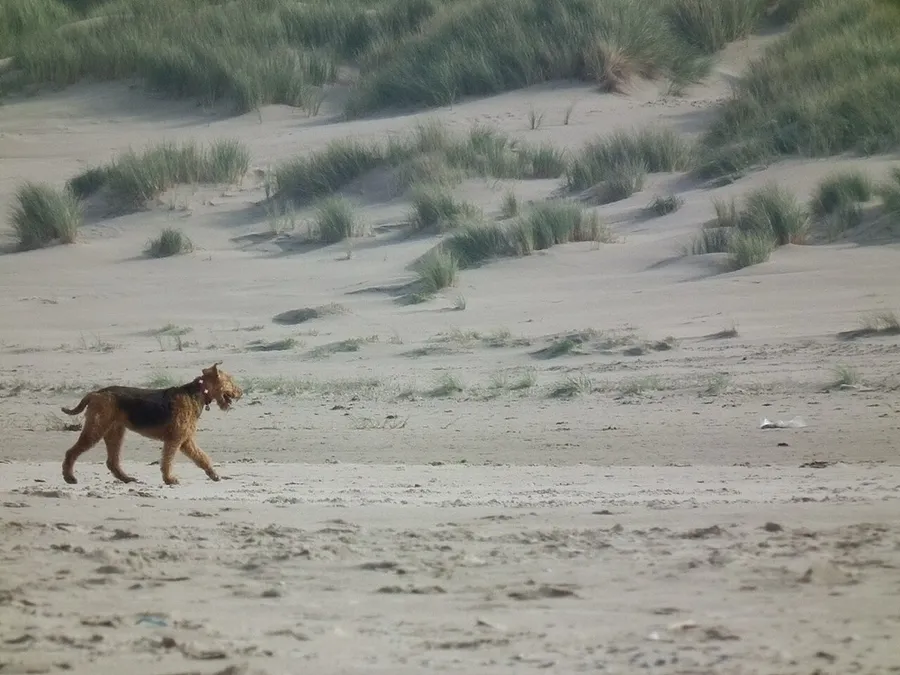
- Hard, dense, wiry double coat; tan with a black or grizzle saddle
- Grooming
- Moderate
- Shedding
- Minimal
- Exercise
- 1–2 hours a day of walks, play, and structured activity
- Recognized by
- American Kennel Club, United Kennel Club, Fédération Cynologique Internationale, Canadian Kennel Club, The Kennel Club (UK)
Good to know
Airedales need daily physical and mental exercise and do best with patient, consistent, fair training that keeps sessions interesting. The wiry coat needs regular brushing and hand-stripping or clipping several times a year.
Health considerations
- Hip dysplasia
- Hypothyroidism
- Skin allergies
Conditions breed clubs commonly screen for. Not every dog will have them. Ask your veterinarian about your own dog.
Did you know?
Airedales are nicknamed the "King of Terriers" because they are the tallest breed in the terrier group.
Terrier group
Originally bred to hunt rodents and other vermin, often by digging. Typically energetic, determined, and full of personality, from small Cairns to the tall Airedale.
Every Airedale Terrier is an individual.
Breed traits are tendencies, not guarantees. Your dog's genetics, early life, health, and everyday experiences all shape who they are. If you'd like help understanding the dog in front of you, let's talk.
Start a conversation